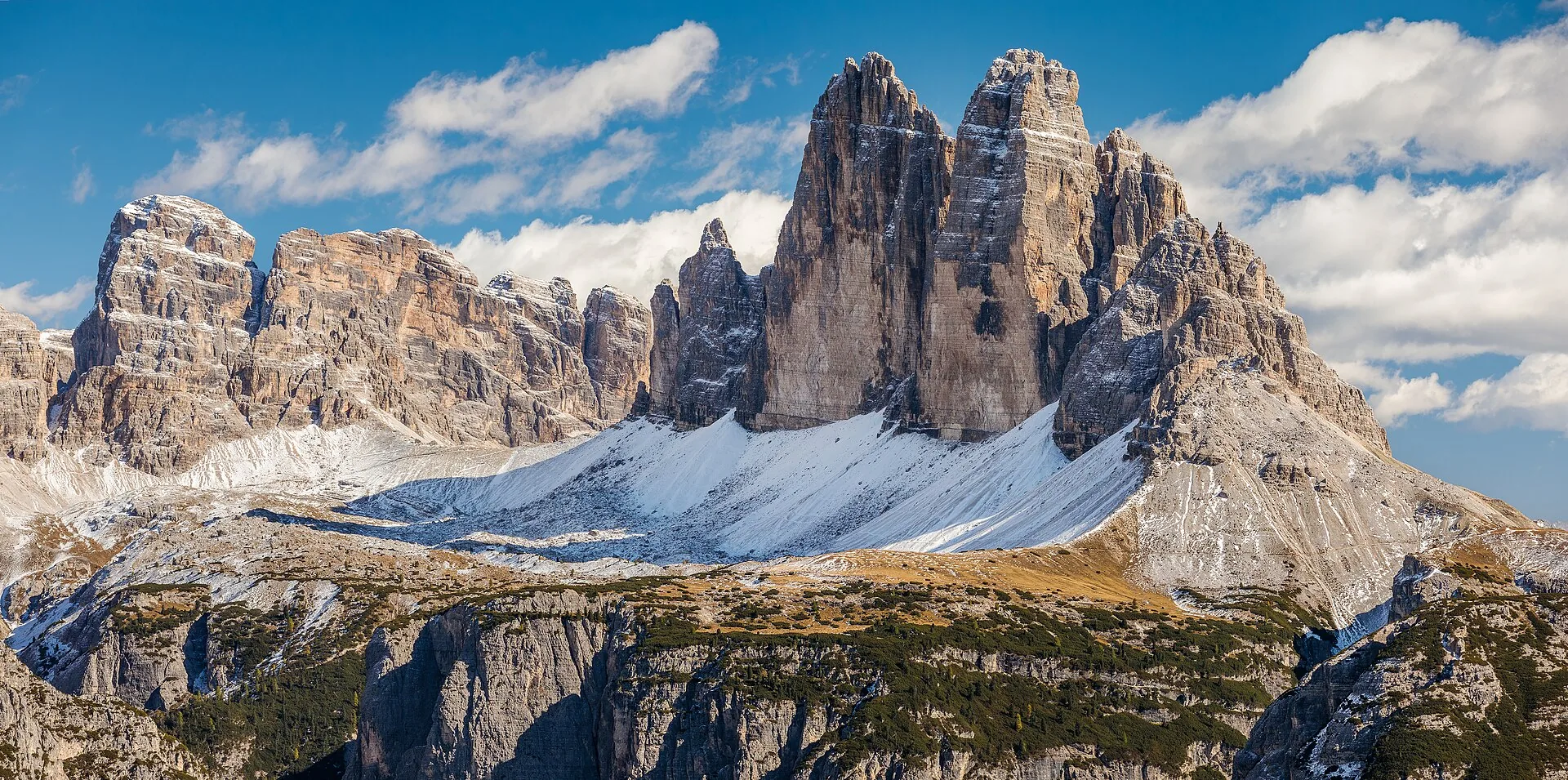
The Dolomites · a day trip from Venice, Italy
Sea Level to the Three Peaks, in a Day
Two hours north of the lagoon the flatland ends and the earth stands on end — pale limestone towers glowing rose at dawn, a road climbing switchback by switchback into a world of larch, scree and impossible blue lakes. This is the day you stand beneath the Tre Cime, three sheer peaks rising to nearly 3,000 metres. Here's how the climb works, which tour reaches which lake, and when the high roads are open.
Where the flatland ends
Where the flatland ends
A day measured in altitude
Venice sits at sea level, on water. The Dolomites begin barely a hundred kilometres north — and yet the day between them is really a climb. The road leaves the Veneto plain, follows the Piave valley up through Belluno, and then starts to gain height in earnest: past Lake Santa Croce, up toward Cortina d'Ampezzo at 1,224 metres, higher still to Lake Misurina at 1,754, and finally to the road-head under the Tre Cime at well over 2,000. You feel the change — the air cools, the larch replaces the vine, the horizon fills with vertical rock. The whole trip is a vertical journey as much as a horizontal one, and it's worth reading it that way.
Why the peaks glow
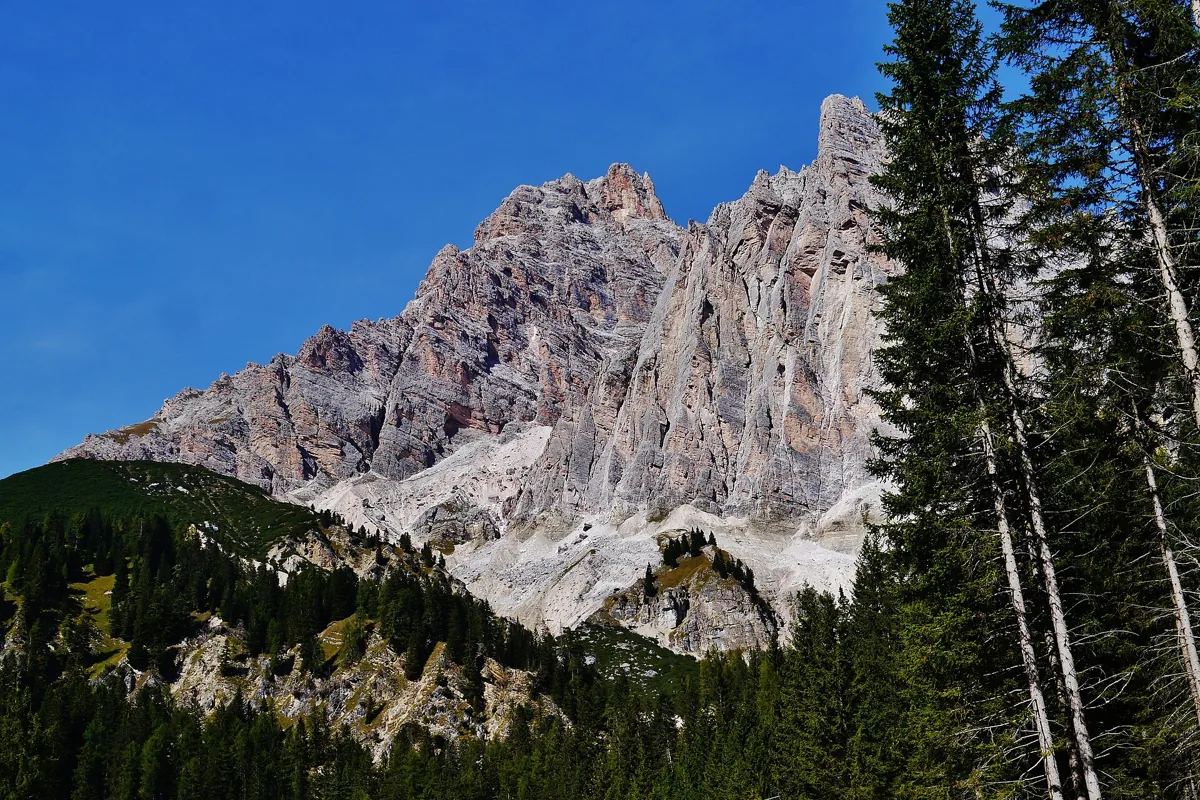
The Dolomites are made of a pale, magnesium-rich limestone — dolomite — that catches low sunlight and throws it back as a warm rose-gold. Italians call the effect enrosadira: at dawn and dusk the towers seem to light from within. It's the reason the range was named a UNESCO World Heritage site in 2009, and the reason a clear day here is worth the early start. The Tre Cime di Lavaredo — Cima Grande flanked by Cima Ovest and Cima Piccola — are the range's most photographed faces, and standing beneath them, even from the road, is the moment the day is built around.
One range, several days in one
A day trip can't see all of the Dolomites, so each tour picks a thread. Most from Venice run the eastern corner: Cortina, Misurina and the Tre Cime, sometimes adding the postcard-perfect Lake Braies further north. It is a long day of driving broken by a handful of unforgettable stops — a lake that mirrors the peaks, a mountain town of pastel facades, a viewpoint where three of the most famous rock towers in the world stand in a row. Fast-moving, scenic, and reaching country you simply can't get to and back from Venice any other way in a day.
The climb, stop by stop
The climb, stop by stop
A Dolomites day from Venice threads together a handful of very different places, each at its own altitude. Here's what each one actually is.
- 1,224 m
Cortina d'Ampezzo
The 'Queen of the Dolomites' — a pastel-fronted mountain town of bell towers and boutiques, host of the 1956 Winter Olympics and a 2026 Games venue. On most tours it's the lunch-and-stroll stop between the passes, the one place with cafés and shops, and a chance to stand in the valley floor while the great rock walls rise on every side.
- 1,496 m
Lake Braies (on some tours)
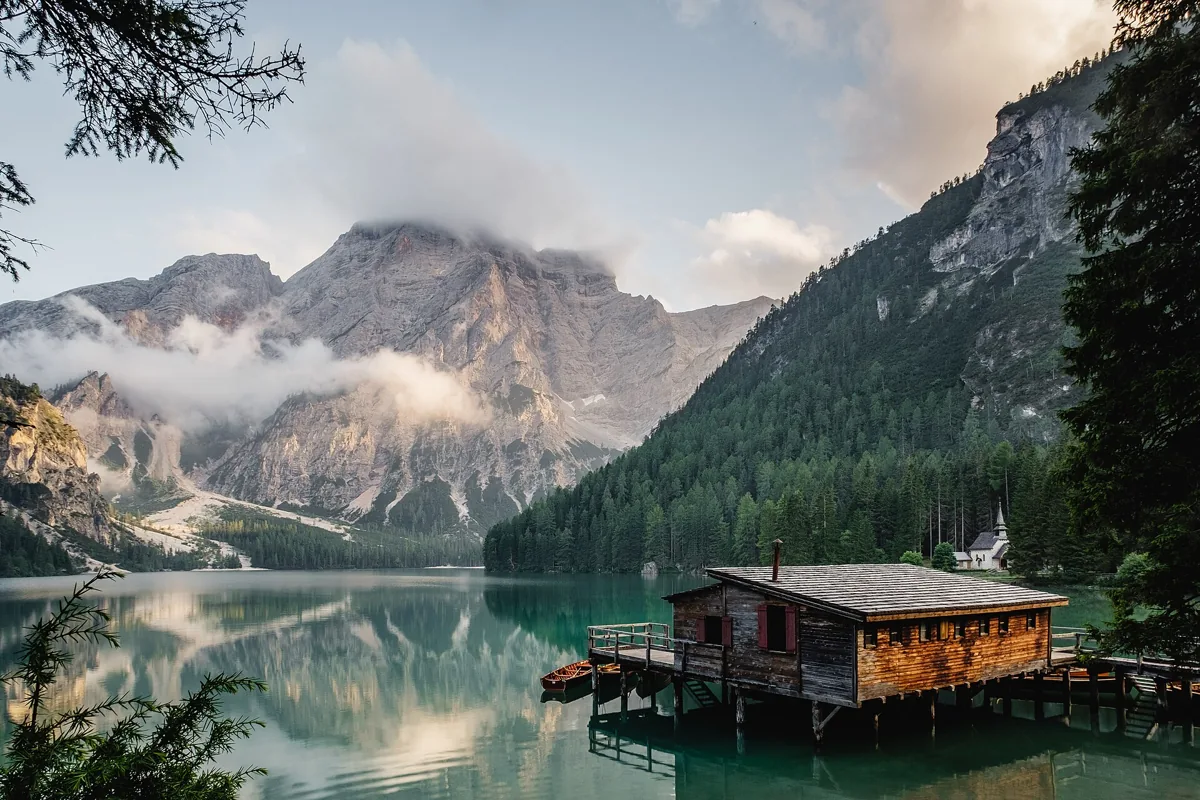
Further north in South Tyrol, Pragser Wildsee — Lake Braies — is the emerald lake with the wooden boathouse and rowboats, one of the most photographed spots in the whole Alps. It appears on the Braies-variant itineraries rather than every tour, so if the boathouse lake is on your list, check the specific trip visits Braies and not only Misurina.
- 1,754 m
Lake Misurina
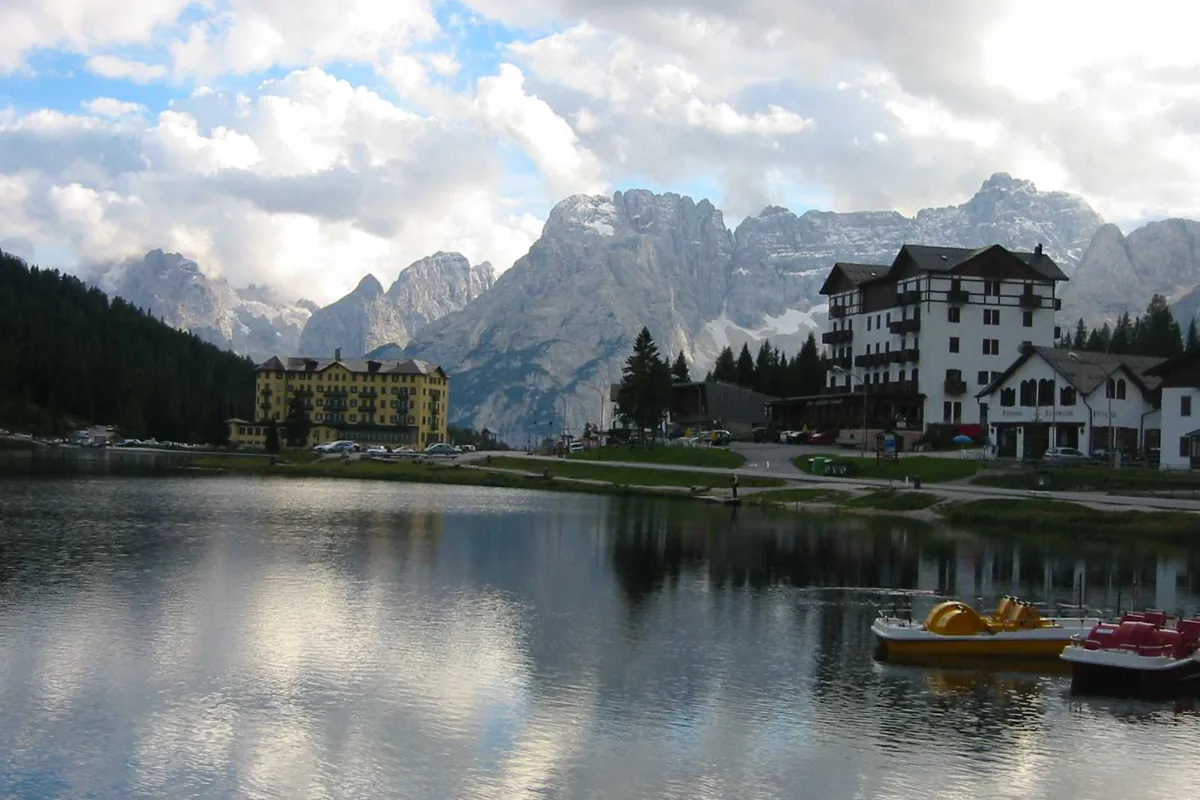
The 'Pearl of Cadore' — a still alpine lake ringed by peaks, mirror-flat on a calm morning, with the Tre Cime and the Sorapiss group reflected in it. The largest natural lake in the Cadore, it's on most Venice itineraries and is often the day's most photographed reflection. A lakeside path and a small cluster of hotels and cafés make it an easy, level stop.
- 2,320 m
Tre Cime di Lavaredo
The day's climax: three near-vertical rock towers — Cima Grande (2,999 m) between Cima Ovest and Cima Piccola — the defining silhouette of the Dolomites. From the Auronzo refuge road-head you get the classic frontal view; the full loop around them is a longer hike. This is the image people come for, and standing under it, even briefly, is what the whole climb is about.
- The passes
Tre Croci and the high roads
Between the stops, the driving is the attraction: the Passo Tre Croci and the Cadore roads climb through larch forest and open scree with the peaks standing over every bend. A good driver-guide picks the viewpoints, and this in-between time — window down, towers wheeling past — is where a lot of the day's best moments actually happen.
When the roads are open
The Dolomites reward good timing and a clear day, and two things you don't control shape the trip — the season and the mountain weather.
The high season is short
The passes and the high lake roads are reliably open roughly from June to October. July to September is the heart of it — green larch, open refuges, the Tre Cime toll road running — with late September bringing the golden larch and thinner crowds. Outside that window the highest roads can be snowbound and many day tours simply don't run the full route, so this is a warm-season trip by nature.
Morning light, afternoon cloud
Mountain weather builds through the day: clear, still mornings often give way to afternoon cloud and the odd summer thunderstorm over the peaks. That rhythm is exactly why the tours leave Venice so early — to put you at Misurina and the Tre Cime while the light is clean and the towers are out, not shrouded. A clear morning here is worth the 7 a.m. start; book for a settled-looking forecast if your dates allow.
It's cooler than the coast
Even in high summer, 1,800 metres is a different climate from a Venice canal. Expect the high stops to be ten degrees or more cooler than the city, breezy, and occasionally wet when the coast is baking. Bring a warm layer and a rain shell whatever the Venice forecast says — the single most common day-trip mistake here is dressing for the lagoon and shivering at the lake.
Viewpoint or hike — check which
The famous image of the Tre Cime — all three towers in a line — is from the walking loop that circles them, a two-to-three-hour hike from the Auronzo refuge. Most Venice day tours are viewpoint trips: they get you to Misurina and the road-head for the classic frontal view, not around the full loop. If walking under the peaks is your whole reason for going, read the itinerary carefully and pick a tour that explicitly includes the hike.
Which tour reaches which lake
Which tour reaches which lake
| Stop | Altitude | What it is | On which tour? |
|---|---|---|---|
| Lake Misurina | 1,754 m | Still lake with peak reflections, level lakeside path | Most Venice day trips (incl. t407433) |
| Tre Cime road-head | 2,320 m | Frontal view of the three towers from the refuge road | Most Venice day trips (viewpoint, not the loop hike) |
| Lake Braies | 1,496 m | Emerald lake with the wooden boathouse | Braies-variant tours only — check the itinerary |
| Cortina d'Ampezzo | 1,224 m | Olympic mountain town, lunch and stroll stop | Most Venice day trips |
Which tour is this?
Which tour is this?
Not every 'Dolomites from Venice' tour is the same product, and the differences decide your whole day. Two distinctions catch people out.
Small-group vs big bus
The best-reviewed Dolomites day trips from Venice run in small-group minivans — a handful of travellers, a driver-guide who picks the viewpoints, and the flexibility to stop where a coach can't. Larger, cheaper coach tours exist and cover similar ground but move more slowly and less nimbly on the mountain roads. If you want the stops-on-a-whim, reach-the-road-head kind of day, look for a small-group minivan tour like this one.
Which lakes are included
Itineraries vary in which lakes they reach. This tour centres on Cortina, Lake Misurina and the Tre Cime; other Venice trips swap in or add Lake Braies with its famous boathouse, further north in South Tyrol. Neither is 'better' — but if a specific lake is the picture you came for, read the stop list and confirm it's on your particular tour before you book, because no single day trip visits every one.
The order of the day
A Dolomites day from Venice runs to a deliberate sequence, set by the long climb north and the afternoon mountain weather. Here's how the hours fall, sea level to summit country and back.
- 01
Out of the lagoon, early
The vans leave Venice (often with a Mestre or Treviso pickup) around 7:00 to 8:00, because the drive north is 2.5 to 3 hours and the goal is to reach the high country before the afternoon cloud builds over the peaks. The first stretch crosses the Veneto plain and climbs the Piave valley — settle in, this is the longest single leg, and the scenery earns its keep only in the second half.
- 02
Into Cortina and the passes
The road gains height past Belluno and Lake Santa Croce and delivers you into the Ampezzo valley and Cortina d'Ampezzo, the 'Queen of the Dolomites'. Many tours pause here or press on over the Passo Tre Croci; either way this is where the rock walls close in and the day changes character — from a drive through foothills to a route among the high peaks themselves.
- 03
Lake Misurina and the Tre Cime
The centrepiece: Lake Misurina at 1,754 metres, mirror-still on a calm morning, with the peaks reflected in it, and then the approach to the Tre Cime di Lavaredo. From the road-head and the Auronzo refuge area you get the classic view of the three towers; the full loop walk around them is a longer hike that most day tours don't include, so check whether your day is a viewpoint stop or a walk.
- 04
A lake, then the long road home
Depending on the itinerary, the day may add Lake Braies — the emerald lake with its wooden boathouse, one of the most photographed spots in the Alps — or another Cadore lake, before turning south. The return is the same long descent in reverse, and you'll usually be back in Venice in the early evening, having climbed most of two vertical kilometres and come back down again in a single day.
The climb, in pictures
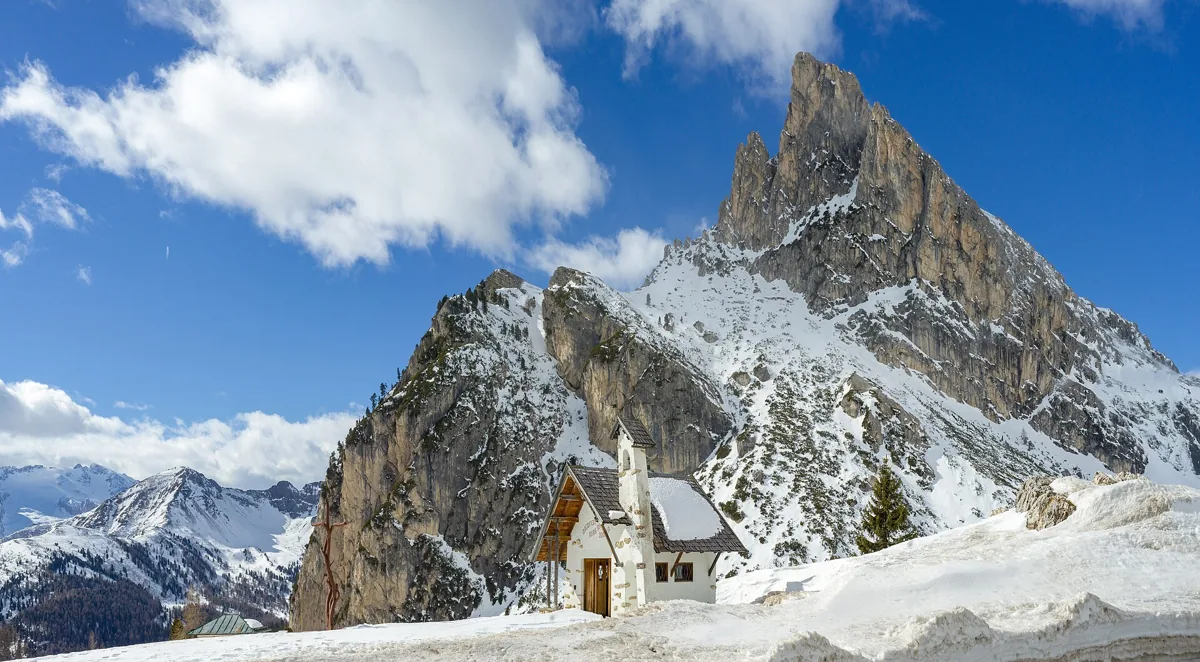
The Tre Cime, the mirror of Lake Misurina, the boathouse at Braies and the high pass roads.
When to go
The Dolomites-from-Venice season is short, and the month you pick changes the roads, the light and the crowds under the peaks.
Early summer (Jun)
June is a fine time: the high roads have opened, the larch is fresh green, the refuges are running and the deep-summer crowds haven't arrived. Snow can still linger on the highest slopes early in the month, and the odd pass may open late after a heavy winter, but a clear June day gives you long light, open routes and room to breathe at Misurina and the Tre Cime.
High summer (Jul–Aug)
The warmest, busiest and most reliable months for open roads — but also when the Tre Cime area and Lake Braies are at their most crowded, and afternoon thunderstorms are most likely over the peaks. If summer is when you travel, take an early tour, enjoy the guaranteed-open routes, and accept company at the famous viewpoints. Bring a warm layer anyway; the high stops stay cool.
Early autumn (Sep–Oct)
Many people's favourite window: September holds summer's open roads with thinner crowds, and late September into early October brings the golden larch — the whole range turning amber — which is one of the great sights of the Alps. Weather grows less settled as October goes on and the first passes begin to close, but a clear early-autumn day here is about as good as the trip gets.
Winter (Nov–May)
The high-country day trip effectively pauses: the Tre Cime toll road and many passes close under snow, and Venice tours switch to lower routes or don't run the full Dolomites loop at all. The Dolomites are magnificent in winter, but that's a ski-season story reached from mountain resorts — not a sea-level day trip from Venice. Treat the Tre Cime as a summer plan.
Dolomites day trips from Venice
Find a Dolomites day for your dates
Every tour below is bookable through GetYourGuide, with live availability and the final price shown in your own currency before you pay — small-group minivans that climb from the lagoon to the high passes, the alpine lakes and the Tre Cime, and back to Venice in a day.
Planning your day in the mountains
Planning your day in the mountains
Read the itinerary for the peaks you want
Before booking, check the stop list against your wish list. The Tre Cime frontal view and Lake Misurina are on most Venice tours; Lake Braies and the full Tre Cime loop hike are not. If a specific place — the boathouse lake, or walking right under the towers — is the reason you're going, confirm this particular tour includes it rather than assuming every 'Dolomites day trip' is the same route.
Dress for the mountains, not the lagoon
The high stops sit around 1,800 to 2,300 metres and run much cooler than Venice — often ten degrees colder, breezy, and sometimes wet when the coast is clear. Bring a warm mid-layer and a rain shell whatever the city forecast says, wear proper closed shoes for the uneven ground at the viewpoints, and pack sunglasses and sunscreen; alpine sun is strong even when the air is cold.
Expect a long day of driving
This is roughly 11 to 12 hours door to door, with about five to six of them on the road — the mountains are the reward for a real day out. Eat a proper breakfast, bring water and a snack for between stops, and if you're prone to car sickness on winding roads, take something before the mountain switchbacks begin and sit forward in the van. Treat the drive as part of the scenery and it flies.
Bring cash for lunch and extras
Lunch usually isn't included — you'll buy it in Cortina or at a refuge — and small extras like the Misurina chairlift or a coffee at a mountain hut are on you. Cards work in Cortina but can be patchy at the highest stops, so carry some euros. Budget an hour of free time around the lunch stop and you'll enjoy the town rather than rushing through it.
Pick a clear morning if you can
The one thing that makes or breaks the day is whether the peaks are out. Mountain weather builds through the afternoon, so a settled, clear morning is what you want — and the tours are timed for it. If your dates are flexible, book for the better-looking forecast; if they're not, choose a tour with free cancellation so a washout morning doesn't cost you money as well as the view.
Planning a Dolomites day trip
Tre Cime di Lavaredo: The Day's Summit
The three towers that define the Dolomites — what you see from a Venice day tour, and what needs a hike.
Read more →THE TWO LAKESLake Misurina vs Lake Braies
The Dolomites' two most famous lakes are often confused — which is on your tour, and what makes each one special.
Read more →THE QUEENCortina d'Ampezzo, the Queen of the Dolomites
The Olympic mountain town at the heart of the day — what to do with your stop between the passes.
Read more →WHEN TO GOThe Best Time for a Dolomites Day Trip
Why the season is short, when the high roads open, and the months that balance the light, the larch and the crowds.
Read more →THE DAYThe Dolomites Day, Stop by Stop
What actually happens across twelve hours from Venice — the drive, the lakes, the peaks and the long road home.
Read more →Questions
Dolomites day-trip questions
How long is the day trip, and how much of it is driving?
It's a full day — roughly 11 to 12 hours door to door from Venice — of which about five to six hours is driving, around 2.5 to 3 hours each way. The mountains are 100-odd kilometres north, so the long drive is unavoidable, and it's why the tours leave early. The reward is a stretch of the high Dolomites — Cortina, Lake Misurina and the Tre Cime — you couldn't reach and return from Venice any other way in a single day.
Do I actually get to walk under the Tre Cime, or is it just a viewpoint?
On most Venice day trips it's a viewpoint stop: you reach Lake Misurina and the Auronzo refuge road-head for the classic frontal view of the three towers, but not the full loop walk that circles them, which is a two-to-three-hour hike. If walking right under the peaks matters to you, read the itinerary carefully and pick a tour that explicitly includes the Tre Cime loop hike, as many day tours don't.
Does this tour visit Lake Braies with the boathouse?
Not necessarily — it depends on the tour. This trip centres on Cortina, Lake Misurina and the Tre Cime; the famous boathouse lake, Braies, sits further north in South Tyrol and appears on the Braies-variant itineraries rather than every Venice day trip. If Lake Braies is the picture you came for, check the specific tour's stop list names Braies before booking, because no single day covers every lake in the range.
When is the best time of year to go?
The high roads are reliably open roughly June to October. July to September is the heart of the season with open refuges and green larch; late September into early October brings the golden larch and thinner crowds, which many regulars consider the best window. Outside that, the highest passes can be snowbound and full-route tours may not run, so treat the Tre Cime as a warm-season trip and expect the high stops to be cool even in midsummer.
What should I wear and bring?
Dress for the mountains, not for Venice. The high stops are around 1,800 to 2,300 metres and often ten degrees or more cooler than the city, breezy and sometimes wet when the coast is clear, so bring a warm layer and a rain shell whatever the Venice forecast says. Wear closed, comfortable shoes for uneven ground, and pack sunglasses, sunscreen, water, a snack and some cash for lunch, which usually isn't included.
Is it suitable for children or people with limited mobility?
It suits families who don't mind a long day in a vehicle — the stops themselves are mostly short and level, like the lakeside at Misurina and the town of Cortina. The main demand is the driving: around five to six hours on winding mountain roads, which can be tiring for young children or anyone prone to car sickness. There's little strenuous walking on the standard viewpoint tours, but check the specific listing for age policies and any hiking if you have mobility concerns.
Can I do the Dolomites as a day trip from Venice at all, or should I stay overnight?
You can, and this is exactly that trip — a well-run day tour reaches Cortina, Lake Misurina and the Tre Cime and returns to Venice the same evening. It is a long day with a lot of driving, so if you want to hike the Tre Cime loop, see the enrosadira glow at dawn or dusk, or explore more than the eastern corner, an overnight in Cortina or Dobbiaco lets you slow down. For a first taste of the high Dolomites from a Venice base, though, the day trip delivers the headline sights.